
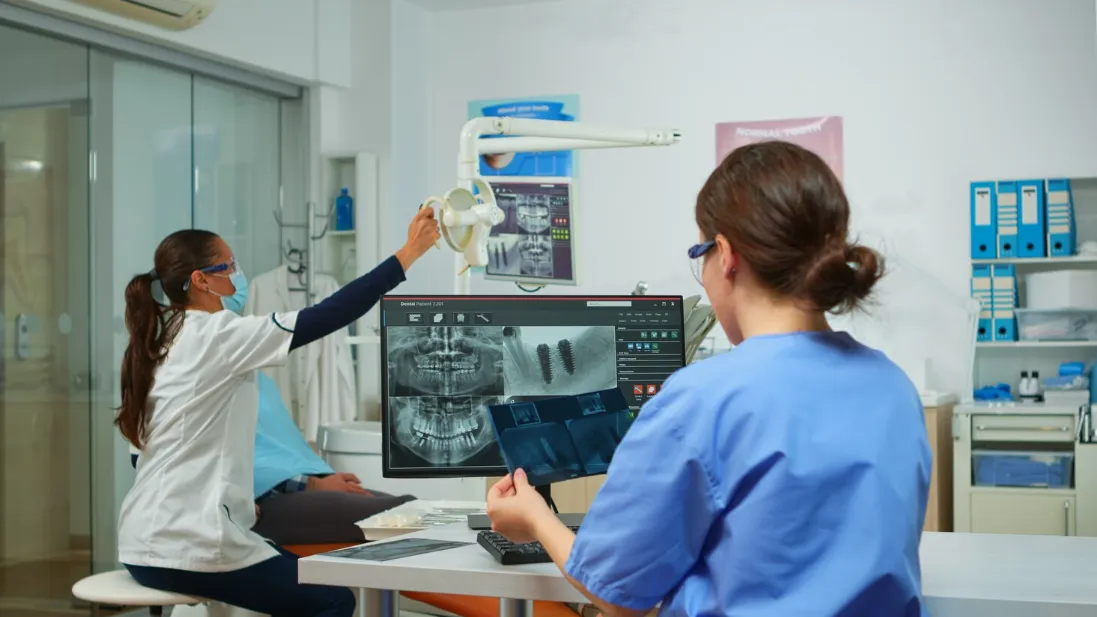
Worried about radiation, cost, or whether you really need dental X-rays?
Digital dental X-rays are a modern, low-radiation diagnostic tool that helps dentists detect problems early often before you feel any symptoms. This means simpler, less invasive, and more cost-effective treatment.
Key Takeaways
- Digital dental X-rays use advanced sensors and produce clear images with lower radiation than traditional film
- They help detect cavities, infections, and bone loss that aren’t visible during exams
- Radiation exposure is minimal and follows strict safety protocols
- X-rays are recommended at intervals based on your oral health and risk factors
- They benefit patients of all ages from children to seniors
What Are Digital Dental X-Rays?
Digital dental X-rays are images of your teeth and jaw captured using an electronic sensor instead of traditional film.
These images appear instantly on a computer, allowing dentists to enhance visibility, zoom in, and make accurate diagnoses in real time.
Why Digital X-Rays Matter
Many dental problems develop below the surface or between teeth areas that can’t be seen during a routine checkup. That’s why regular exams, including imaging, are essential. Learn more about why dental exams are important.
Digital X-rays help your dentist:
- Detect cavities between teeth or under fillings
- Identify infections at the root of teeth
- Evaluate bone loss from gum disease
- Monitor wisdom teeth development
- Plan treatments like implants, braces, or root canals
Early detection leads to less invasive and more affordable treatment.
Are Digital Dental X-Rays Safe?
Yesdigital dental X-rays are considered very safe.
They use significantly less radiation than traditional film X-rays, and exposure is carefully controlled.
Safety Highlights
- Lower radiation dose compared to older methods
- Targeted imaging to minimize exposure
- Use of protective gear when needed
- Follow the ALARA principle (As Low As Reasonably Achievable)
For perspective, a routine set of dental X-rays exposes you to very minimal radiation similar to everyday environmental exposure over a short period.
When Do You Need Dental X-Rays?
Your dentist may recommend X-rays for:
- Tooth pain or sensitivity
- Suspected cavities or broken fillings
- Gum disease evaluation
- Monitoring children’s dental development
- Planning treatments like implants or orthodontics
What to Expect During the Procedure
Step-by-Step
- A small sensor is placed in your mouth (or a panoramic machine is used)
- You bite gently or stay still for a few seconds
- The image appears instantly on a screen
- Your dentist reviews and explains the results
Comfort Level
- Mild pressure from the sensor
- Quick and painless process
- No recovery time needed
Types of Digital Dental X-Rays
- Bitewing: Detects cavities between teeth
- Periapical: Shows the entire tooth and root
- Panoramic: Captures a full view of the jaw and teeth
- CBCT (3D scan): Used for complex cases like implants
How Often Should You Get X-Rays?
There’s no one-size-fits-all schedule. It depends on your dental health and risk level.
General Guidelines
- Low-risk adults: Every 12–24 months
- Higher-risk patients: Every 6–18 months
- Children: More frequent monitoring due to growth and higher decay risk
Benefits Over Traditional X-Rays
- Lower radiation exposure
- Instant image results
- Enhanced image clarity and accuracy
- Easy sharing with specialists or insurance
- Environmentally friendly (no chemicals or film)
Benefits for Different Age Groups
Children
- Monitor tooth development
- Detect early cavities
Adults
- Identify issues under fillings or crowns
- Plan restorative or cosmetic treatments
Seniors
- Assess bone health and gum disease
- Monitor dental restorations and implants
Local Care in Aurora, Ontario
If you’re looking for a dentist in Aurora or near Newmarket, choosing a clinic that uses modern diagnostic tools is important.
Aurora Family Dentistry offers digital dental X-rays as part of a comprehensive, patient-focused approach ensuring accurate diagnosis and personalized treatment for every stage of life.
FAQs
Are dental X-rays safe during pregnancy?
They can be performed when necessary with protective measures. Always inform your dentist if you are pregnant.
Do I need X-rays if I don’t have pain?
Yes. Many dental problems develop without symptoms and are only visible through X-rays.
How long do digital X-rays take?
Just a few seconds, with instant results.
Are X-rays covered by insurance?
Most plans cover routine dental X-rays, but coverage varies.
Do X-rays replace a dental exam?
No. They work alongside a clinical exam to give a complete picture.
Conclusion
The benefits of digital dental X-rays are clearlower radiation, faster results, and earlier detection of dental issues.
They play a key role in preventive care, helping you avoid more serious problems and maintain long-term oral health. If you have questions about timing or safety, your dentist can guide you based on your individual needs.